


Connector Testing Techniques: Ensuring Reliability and Performance
SV Microwave has earned a reputation for producing high-quality RF products that exceed our customers' expectations. An important way we meet and exceed these expectations is through a variety of connector testing techniques to ensure reliability and performance.
Different connectors need different tests depending on their intended application. Some of the most common tests we perform are:
Learn more about these tests below!
VSWR and Insertion Loss
VSWR and Insertion loss are tested simultaneously. During testing, we evaluate how well the connector performs electronically. We quantify insertion loss by how the signal passes through the connector, and VSWR by how much of the signal is reflected back.
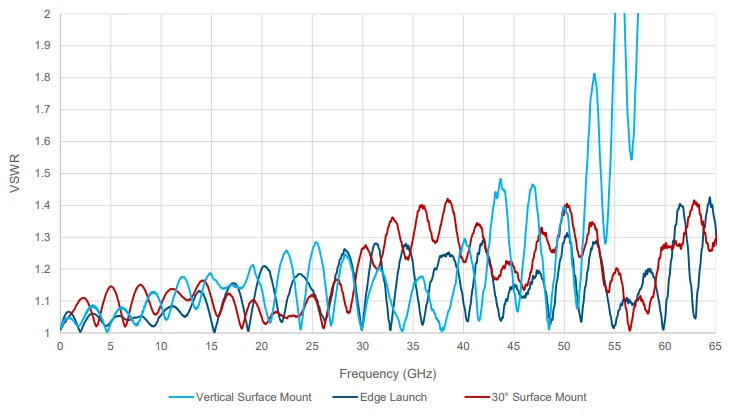
VSWR Performance across Solderless PCB Connector Mounting Styles
This is tested with a fully calibrated vector network analyzer, or VNA. This is a test instrument that measures the magnitude and phase of RF signals to test components by calculating their electrical properties, such as reflection and transmission coefficients.
Thermal Shock
Thermal Shock is an environmental test that subjects connectors to rapid and severe changes in temperature. This ensures that the parts will survive the wide thermal swings common in aerospace and other stressful environments without degrading.
In order to achieve these rapid and severe temperature changes, SV uses a special environmental oven/fridge.
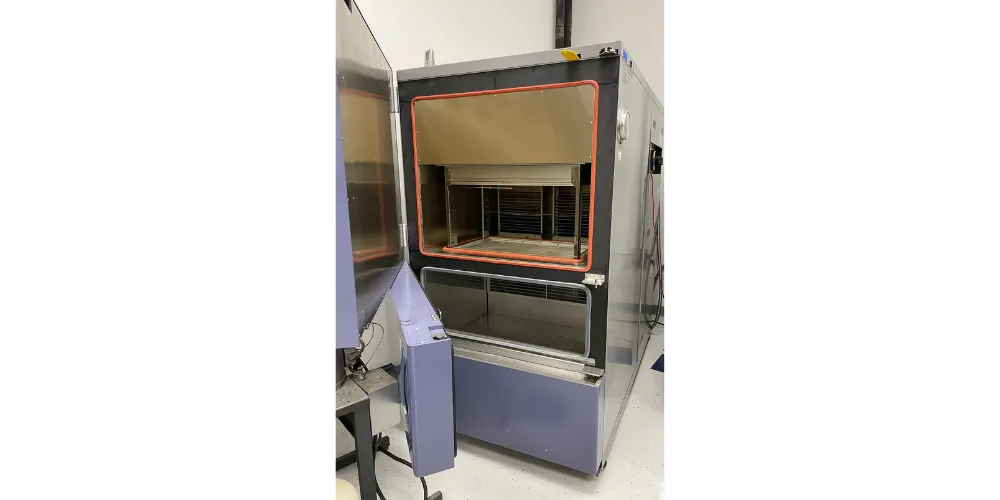
Thermal Shock Testing Chamber
VSWR and Insertion Loss are typically tested before and after thermal shock to ensure that performance hasn’t degraded.
Conditioning and Peak Power
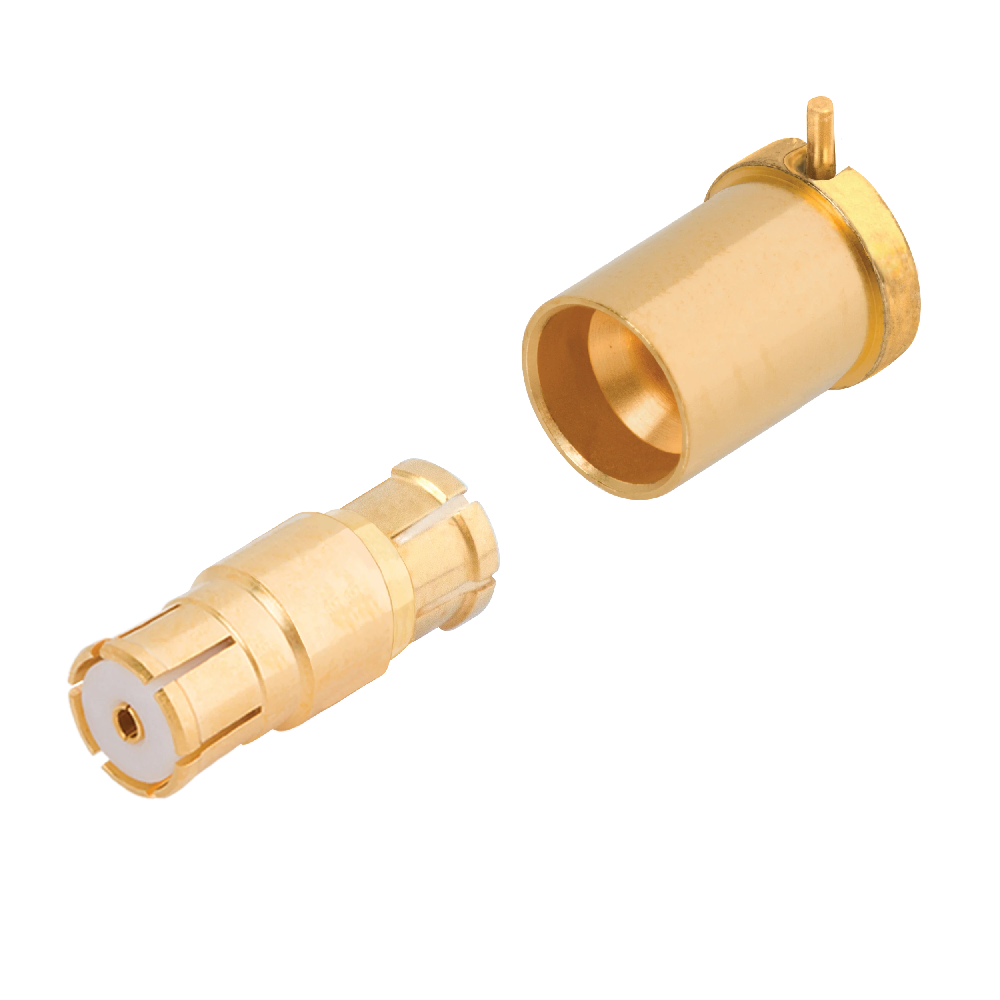
BMB RF Interconnects - Large Form Factor Interface for Higher-Power Applications than SMPx
Conditioning and Peak Power work hand in hand to test resistive connectors, such as attenuators and terminations, and to assess their ability to withstand varying power loads.
Conditioning applies a specified average wattage of DC (direct current) power to the connector for long periods, most commonly 4 days. This ensures the device can manage a constant thermal load without the resistance drifting or burning up.
Peak power sends extremely short pulses of higher DC power through the connector for a short period, most commonly for an hour or two. This ensures that no arcing will destroy the connector. Additionally, it certifies that the connectors work not only on the bench but also under load once installed.
Vibration & Shock
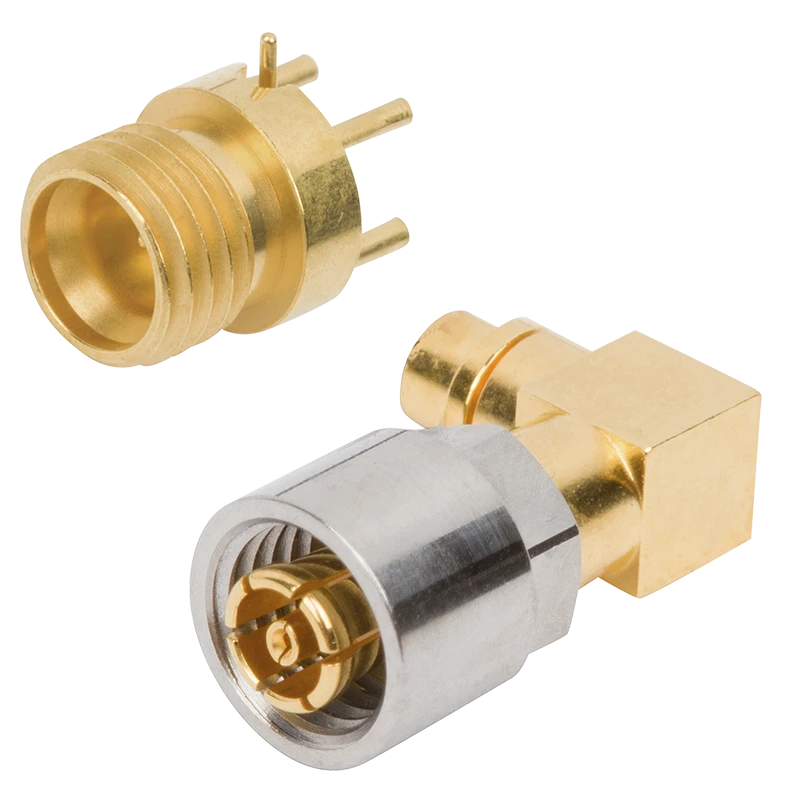
Threaded SMPM Interconnects - Ideal for High Vibration Environments
SV has the capability to test for vibration. To test for vibration, the connector is vibrated along each axis for a short time to ensure the construction is sound, even in harsh vibration environments common in aerospace and other demanding applications.
Shock testing is similar, but instead of vibrating on each axis for a short period, the connector is hit with a single large jolt to ensure it can momentarily withstand intense forces.
The Importance of Connector Testing Techniques
The connector testing techniques listed above are a few of the ways SV Microwave maintains our quality. These ensure our connectors are reliable, robust, and suited to their intended application. If needed, we are happy to perform specific tests for customers as needed.
Explore our tested and verified connectors today.
recent releases
Connector Testing Techniques: Ensuring Reliability and Performance
SV Microwave has earned a reputation for producing high-quality RF products that exceed our customers' expectations. An important way we meet and exceed these expectations is through a variety of connector testing techniques to ensure reliability and performance.
Different connectors need different tests depending on their intended application. Some of the most common tests we perform are:
Learn more about these tests below!
VSWR and Insertion Loss
VSWR and Insertion loss are tested simultaneously. During testing, we evaluate how well the connector performs electronically. We quantify insertion loss by how the signal passes through the connector, and VSWR by how much of the signal is reflected back.
VSWR Performance across Solderless PCB Connector Mounting Styles
This is tested with a fully calibrated vector network analyzer, or VNA. This is a test instrument that measures the magnitude and phase of RF signals to test components by calculating their electrical properties, such as reflection and transmission coefficients.
Thermal Shock
Thermal Shock is an environmental test that subjects connectors to rapid and severe changes in temperature. This ensures that the parts will survive the wide thermal swings common in aerospace and other stressful environments without degrading.
In order to achieve these rapid and severe temperature changes, SV uses a special environmental oven/fridge.
Thermal Shock Testing Chamber
VSWR and Insertion Loss are typically tested before and after thermal shock to ensure that performance hasn’t degraded.
Conditioning and Peak Power
BMB RF Interconnects - Large Form Factor Interface for Higher-Power Applications than SMPx
Conditioning and Peak Power work hand in hand to test resistive connectors, such as attenuators and terminations, and to assess their ability to withstand varying power loads.
Conditioning applies a specified average wattage of DC (direct current) power to the connector for long periods, most commonly 4 days. This ensures the device can manage a constant thermal load without the resistance drifting or burning up.
Peak power sends extremely short pulses of higher DC power through the connector for a short period, most commonly for an hour or two. This ensures that no arcing will destroy the connector. Additionally, it certifies that the connectors work not only on the bench but also under load once installed.
Vibration & Shock
Threaded SMPM Interconnects - Ideal for High Vibration Environments
SV has the capability to test for vibration. To test for vibration, the connector is vibrated along each axis for a short time to ensure the construction is sound, even in harsh vibration environments common in aerospace and other demanding applications.
Shock testing is similar, but instead of vibrating on each axis for a short period, the connector is hit with a single large jolt to ensure it can momentarily withstand intense forces.
The Importance of Connector Testing Techniques
The connector testing techniques listed above are a few of the ways SV Microwave maintains our quality. These ensure our connectors are reliable, robust, and suited to their intended application. If needed, we are happy to perform specific tests for customers as needed.
Explore our tested and verified connectors today.